This animation shows the difference between the fixed and the rotating frame of reference. The animation shows a net magnetic vector (purple arrow) as it precesses in an external magnetic field (transparent arrow). In addition to the precessional motion, the vector is also being tipped 90° into the transverse plane and allowed to recover. In the view shown on the right, you are a stationary (fixed) observer looking in on the system. The vector appears to spiral down to the rotating blue platform and then spiral back upwards as it recovers. There is also a video camera mounted on the platform as it turns. The camera has a different frame of reference to you, because it is rotating at the same speed as the platform. This is what is known as the rotating frame of reference. The camera is taking a video and the view shown on the right displays what the camera can see. The vector no longer appears to spiral up and down. Instead, it simply tips into the transverse plane and then recover.
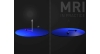 Animation 1.1 Rotating and Fixed Frame of Reference
09/05/2023
Animation 1.1 Rotating and Fixed Frame of Reference
09/05/2023
 Animation 1.2 (NMV and Coil)
09/05/2023
Animation 1.2 (NMV and Coil)
09/05/2023
 Animation 1.3 (NMV Coil and Oscilloscope)
09/05/2023
Animation 1.3 (NMV Coil and Oscilloscope)
09/05/2023
 Animation 2.1 (T1 vs T2)
09/05/2023
Animation 2.1 (T1 vs T2)
09/05/2023
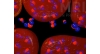 Animation 2.2 (Diffusion)
09/05/2023
Animation 2.2 (Diffusion)
09/05/2023
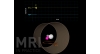 Animation 3.1 (The 180° RF Pulse)
09/05/2023
Animation 3.1 (The 180° RF Pulse)
09/05/2023
 Animation 3.2 (The Larmor Grand Prix)
09/05/2023
Animation 3.2 (The Larmor Grand Prix)
09/05/2023
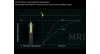 Animation 3.3 Inversion Recovery
09/05/2023
Animation 3.3 Inversion Recovery
09/05/2023
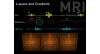 Animation 6.1 (Slices Chest of Drawers)
09/05/2023
Animation 6.1 (Slices Chest of Drawers)
09/05/2023
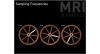 Animation 6.2. (Sampling Frequencies)
09/05/2023
Animation 6.2. (Sampling Frequencies)
09/05/2023
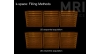 Animation 6.3 (Filling Methods)
09/05/2023
Animation 6.3 (Filling Methods)
09/05/2023
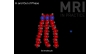 Animation 8.1 (In and Out of Phase)
09/05/2023
Animation 8.1 (In and Out of Phase)
09/05/2023
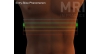 Animation 8.2 (Entry-slice Phenomenon)
09/05/2023
Animation 8.2 (Entry-slice Phenomenon)
09/05/2023
 Animation 8.3 Time of Flight
09/05/2023
Animation 8.3 Time of Flight
09/05/2023
 Animation 8.4 (Gradient Moment Nulling)
09/05/2023
Animation 8.4 (Gradient Moment Nulling)
09/05/2023
 Animation 9.1 (Closed and Open Systems)
09/05/2023
Animation 9.1 (Closed and Open Systems)
09/05/2023
 Animation 9.2 (Active Shielding)
09/05/2023
Animation 9.2 (Active Shielding)
09/05/2023
 Animation 9.3 (NMV Coil and Scanner Loop)
09/05/2023
Animation 9.3 (NMV Coil and Scanner Loop)
09/05/2023
 +90 506 591 16 16